How IV Ketamine Affects the Brain
The human brain is constantly adapting. Every experience, memory, and interaction involves communication between billions of nerve cells.
When depression becomes persistent, researchers believe changes in brain signaling and neural connections may contribute to symptoms.
Understanding how IV ketamine affects the brain helps explain why scientists are studying this medication as a potential option for certain individuals who have not responded adequately to conventional depression treatments.
Understanding Brain Communication
Brain cells communicate through chemical messengers called neurotransmitters.
Many traditional antidepressants influence serotonin or norepinephrine, which play important roles in mood regulation.
Ketamine works differently.
Its primary pharmacological action involves blocking N-methyl-D-aspartate (NMDA) receptors, which are part of the brain’s glutamate signaling system.
Glutamate is an important neurotransmitter involved in learning, memory, and communication between nerve cells.
Researchers believe ketamine’s effects on glutamate signaling may help explain its relatively rapid antidepressant action in some patients.
How IV Ketamine Affects the Brain’s Neural Connections
One important area of research involves neuroplasticity.
Neuroplasticity describes the brain’s ability to change and adapt through experience, learning, and changes in neural activity.
Depression has been associated with changes in certain brain networks involved in mood, motivation, and emotional processing.
Laboratory and clinical research suggests ketamine may influence biological pathways associated with synaptic plasticity, including processes involving brain-derived neurotrophic factor (BDNF) and other signaling systems.
These findings are promising, but the precise relationship between these biological changes and long-term clinical improvement is still being investigated.
It would be inaccurate to suggest that ketamine simply repairs damaged brain connections or permanently rewires the brain. Learn more here.
Why Researchers Are Interested in Rapid Antidepressant Effects
Many conventional antidepressants require several weeks before patients experience meaningful improvement.
In contrast, some clinical studies have found that ketamine can reduce depressive symptoms within hours or days.
This difference has generated significant interest among researchers studying treatment-resistant depression.
However, response varies considerably.
Some patients experience meaningful improvement, while others experience limited benefit or no improvement.
When benefits occur, they may diminish over time, and the most effective long-term treatment strategies remain an active area of research.
What Makes IV Administration Different?
Intravenous administration delivers medication directly into the bloodstream, allowing clinicians to control the infusion rate and monitor the patient’s response.
During treatment, patients may experience changes in perception, dissociation, dizziness, nausea, or temporary increases in blood pressure.
Medical screening is important because ketamine may be inappropriate for people with certain cardiovascular, psychiatric, or other medical conditions.
Patients also require monitoring during treatment and an appropriate recovery period afterward.
IV ketamine for depression is an off-label treatment. It is distinct from FDA-approved intranasal esketamine, which has specific indications and administration requirements.
The Role of Medical Evaluation
Understanding how IV ketamine affects the brain is only one part of determining whether treatment may be appropriate.
A qualified healthcare professional must also consider:
- The patient’s diagnosis and treatment history
- Previous medication responses
- Current medications
- Cardiovascular health
- Psychiatric history
- Potential benefits and risks
- Available evidence-based alternatives
Treatment decisions should be individualized rather than based on the assumption that one approach works for everyone.
Continuing Research and New Possibilities
Ketamine research has expanded scientific understanding of depression and the biological systems involved in mood regulation.
Although important questions remain about long-term effectiveness, safety, and patient selection, these discoveries have created additional avenues for studying difficult-to-treat depression.
At Elevate Mind & Mood in Lincoln, Nebraska, individuals interested in exploring treatment options can request a consultation to discuss their history and determine whether further evaluation may be appropriate.
Call 402-817-4117 to schedule a free consultation to learn more about the services available at Elevate Mind & Mood.
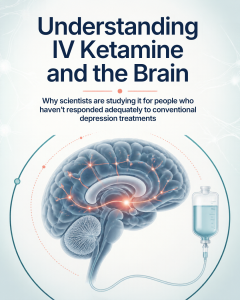
esearchers are studying how IV ketamine influences brain signaling, neuroplasticity, and symptoms of treatment-resistant depression.