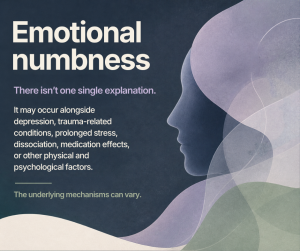
Emotional numbness can occur alongside depression, trauma-related conditions, prolonged stress, and other psychological or physical factors.
Emotional Numbness: Why You Can Feel Disconnected From Your Emotions
Emotional numbness doesn’t always look like sadness, anxiety, or obvious distress. Sometimes it feels like an absence of emotion altogether.
Imagine a woman sitting at dinner with her family. Everyone is laughing, sharing stories, and enjoying the evening. She smiles when she’s supposed to. She participates in the conversation.
But privately, she feels strangely disconnected.
She loves her family. She knows she’s fortunate. Nothing particularly terrible happened that day.
So why does everything feel so distant?
For some people, emotional numbness can be one of the more confusing experiences associated with mental health.
What Is Emotional Numbness?
Emotional numbness describes a subjective feeling of being disconnected from, or having reduced access to, one’s emotions.
Someone experiencing emotional numbness might describe feeling:
- Emotionally flat or disconnected
- Unable to experience feelings as intensely as before
- Detached from people or experiences
- Unusually indifferent to situations that previously mattered
- As though they’re going through the motions of everyday life
Emotional numbness isn’t a diagnosis by itself. It’s an experience that can occur for several different reasons.
It may also be difficult to recognize because someone can appear perfectly functional while feeling emotionally disconnected internally.
Why Does Emotional Numbness Happen?
There isn’t one single explanation.
Emotional numbness may occur alongside depression, trauma-related conditions, prolonged stress, dissociation, certain medication effects, or other physical and psychological factors.
Sometimes emotional disconnection develops during periods of overwhelming stress.
The brain and nervous system continuously respond to internal and external demands. Under difficult circumstances, changes in emotional processing may influence how intensely someone experiences or recognizes feelings.
Researchers continue studying the relationships among stress, emotional regulation, dissociation, and the brain networks involved in processing emotions.
However, emotional numbness shouldn’t automatically be interpreted as the brain deliberately shutting off emotions for protection. The underlying mechanisms can vary considerably.
Emotional Numbness vs. Anhedonia
These experiences can overlap, but they aren’t exactly the same.
Anhedonia refers primarily to a reduced ability to experience pleasure or interest in normally rewarding activities.
Emotional numbness can involve a broader reduction in emotional experience, potentially affecting both positive and negative feelings.
Someone experiencing anhedonia may no longer enjoy activities they once loved.
Someone experiencing emotional numbness may describe feeling disconnected from happiness, sadness, excitement, affection, or other emotions.
Understanding these distinctions can help healthcare professionals evaluate what someone is experiencing.
Can Chronic Stress Affect Emotional Processing?
Prolonged stress can influence attention, sleep, mood, emotional regulation, and the way people respond to everyday experiences.
When someone spends extended periods managing demanding circumstances, they may begin to notice changes in their emotional responses.
They might feel unusually detached, less enthusiastic, or emotionally exhausted.
But stress isn’t the only possible explanation.
Changes in emotional experience can also be associated with medical conditions, medications, substance use, and mental health disorders. Persistent symptoms deserve an individualized evaluation.
What Happens in the Brain?
Emotions don’t originate in one isolated area of the brain.
They involve communication among interconnected networks associated with memory, attention, threat detection, bodily sensations, reward, and decision-making.
Brain regions including the amygdala, insula, and prefrontal cortex contribute to different aspects of emotional processing.
Researchers are investigating how changes in these networks relate to depression, trauma, dissociation, and emotional regulation.
These relationships are complex. There isn’t a simple brain scan or neurotransmitter measurement that explains every experience of emotional numbness.
What Can Help?
The most appropriate approach depends on what’s contributing to the symptoms.
A qualified healthcare professional may consider a person’s mental health history, medications, physical health, sleep, stress levels, and other symptoms.
Depending on the underlying cause, care may involve psychotherapy, medication review, treatment of associated conditions, lifestyle support, or other individualized interventions.
It’s especially important not to stop or change prescribed medications without medical guidance. Learn more here.
When You Miss Feeling Like Yourself
Sometimes the most difficult part of emotional numbness is remembering how things used to feel.
You remember being excited about a vacation.
You remember laughing until your stomach hurt.
You remember feeling deeply connected to the people around you.
And you wonder why those experiences seem different now.
If emotional numbness is persistent or interfering with your relationships or daily life, consider discussing it with a healthcare professional.
At Elevate Mind & Mood in Lincoln, Nebraska, we believe understanding mental health begins with listening to the individual’s experience and considering the broader factors that may contribute to how they feel.
Mental health isn’t always about experiencing too many difficult emotions. Sometimes it’s about noticing when emotions feel unusually far away.
Call us at 402-817-4117 to schedule a free consultation to see if IV ketamine therapy is beneficial for you!