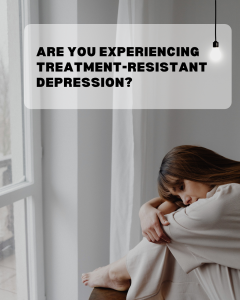
When depression doesn’t improve with traditional treatments, exploring additional options may be an important next step.
Treatment-Resistant Depression
Depression can affect nearly every aspect of a person’s life, from relationships and motivation to sleep, energy, and daily functioning. For many individuals, antidepressant medications and psychotherapy provide meaningful relief. However, others continue struggling despite trying multiple approaches.
This experience is sometimes described as treatment-resistant depression, a condition that can leave individuals feeling frustrated and uncertain about what to try next.
Understanding why traditional approaches do not always work can help patients explore additional options with qualified healthcare professionals.
What Is Treatment-Resistant Depression?
Treatment-resistant depression generally refers to major depressive disorder that has not responded adequately to at least two antidepressant treatments prescribed at appropriate doses and durations.
However, determining whether depression is truly treatment-resistant requires a thorough clinical evaluation.
Healthcare providers may consider several factors, including:
- Whether medications were taken consistently
- Whether the dosage and duration were appropriate
- Other medical conditions that may affect mood
- Medication side effects
- Coexisting mental health conditions
- Sleep disturbances or substance use
This evaluation helps identify whether a different treatment approach may be appropriate.
Why Antidepressants Don’t Work for Everyone
Depression is complex. It involves biological, psychological, environmental, and social factors.
Many traditional antidepressants influence neurotransmitters such as serotonin and norepinephrine. These medications can be effective, but not everyone responds to them in the same way.
Differences in genetics, medication metabolism, symptom patterns, and underlying health conditions can influence treatment outcomes.
Researchers have also investigated the role of glutamate, a neurotransmitter involved in communication between brain cells.
These discoveries have contributed to interest in treatment approaches that work through different biological pathways.
Exploring Additional Treatment Options
For people experiencing treatment-resistant depression, healthcare professionals may consider several evidence-based strategies.
Options can include:
- Adjusting an existing medication
- Switching antidepressants
- Combining medications
- Adding structured psychotherapy
- Transcranial magnetic stimulation (TMS)
- Electroconvulsive therapy (ECT)
- Esketamine nasal spray for eligible patients
- IV ketamine administered under medical supervision
IV ketamine has demonstrated rapid antidepressant effects in some clinical studies, including among people who have not responded adequately to conventional treatments.
However, IV ketamine for depression is an off-label use, meaning it is not FDA-approved for that indication. Benefits vary, and careful screening and monitoring are essential. Learn more here.
How IV Ketamine Differs From Traditional Antidepressants
Ketamine primarily affects glutamate signaling through its action on NMDA receptors.
Researchers believe its antidepressant effects may involve changes in communication between brain cells and processes related to neuroplasticity.
Some patients experience symptom improvement within hours or days, although others do not respond, and benefits may be temporary.
Potential side effects include dissociation, increased blood pressure, nausea, and sedation. Treatment requires appropriate medical supervision, and long-term outcomes continue to be studied.
Finding the Right Next Step
Living with depression that has not improved despite treatment can be discouraging.
However, an inadequate response to previous medications does not mean that every available approach has been exhausted.
For individuals exploring options for treatment-resistant depression, a comprehensive medical evaluation can help determine which therapies may be appropriate.
At Elevate Mind & Mood in Lincoln, Nebraska, individuals can request a consultation to learn about available services and discuss whether further evaluation for IV ketamine therapy may be appropriate.
Schedule a free consultation with Elevate Mind & Mood to learn more about your options.