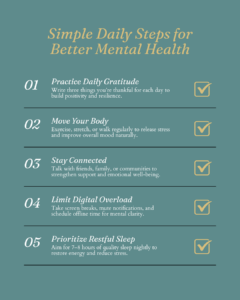
Small daily habits can make a meaningful difference in your emotional well-being. Gratitude, movement, connection, limiting screen time, and quality sleep all help support better mental health.
Daily Mental Health Habits That Support Emotional Wellness
Maintaining daily mental health habits is one of the most effective ways to support emotional wellness. Just as brushing your teeth protects your physical health, small daily routines can help strengthen your emotional well-being. While everyone experiences stress from time to time, healthy habits can improve resilience and help you better navigate life’s challenges.
The good news is that you don’t have to make dramatic changes overnight. Instead, consistent, intentional choices often have the greatest long-term impact. Read this article for even more mental health habits.
Why Daily Mental Health Habits Matter
Mental health influences nearly every part of our lives. It affects how we think, feel, make decisions, manage stress, and build relationships.
Although no one feels their best every day, developing daily mental health habits may help support emotional balance and overall wellness.
Many people are surprised to learn that simple lifestyle choices can influence mood, focus, energy, and stress management.
Prioritize Quality Sleep
Sleep is one of the foundations of good mental health.
During sleep, the brain processes memories, regulates emotions, and restores important body systems. Poor sleep can contribute to irritability, difficulty concentrating, and increased stress.
To improve sleep quality:
- Go to bed at the same time each night.
- Keep your bedroom cool and dark.
- Avoid screens before bedtime.
- Limit caffeine later in the day.
Even small improvements in sleep can positively affect emotional well-being.
Move Your Body Every Day
Physical activity benefits both the body and the mind.
Regular movement may help:
- Reduce everyday stress
- Improve energy levels
- Support healthy sleep
- Boost overall mood
Exercise doesn’t have to be intense. A daily walk, stretching, gardening, or riding a bike all count.
The goal is consistency rather than perfection.
Nourish Your Brain
The foods we eat provide fuel for the brain.
Eating a balanced diet that includes vegetables, fruits, lean proteins, healthy fats, and whole grains supports overall health.
Staying hydrated throughout the day is equally important, as even mild dehydration can affect concentration and energy.
Spend Time Outdoors
Nature has a calming effect for many people.
Fresh air, sunshine, and time away from screens can help people feel refreshed and recharged.
Whether it’s a short walk through the neighborhood or time spent in a local park, getting outside regularly supports overall wellness.
Stay Connected
Healthy relationships play an important role in emotional health.
Spending time with family, friends, neighbors, or faith communities helps reduce feelings of isolation and builds a stronger support system.
Even a simple phone call or coffee with a friend can make a meaningful difference.
Practice Mindfulness
Mindfulness means paying attention to the present moment without judgment.
Many people practice mindfulness through:
- Prayer
- Deep breathing
- Meditation
- Journaling
- Quiet reflection
These activities can help create moments of calm during busy days.
Limit Information Overload
Today’s world provides a constant stream of information.
While staying informed is important, continuously consuming news or social media may increase stress for some individuals.
Setting healthy boundaries around technology can help create more balance throughout the day.
Give Yourself Grace
No one gets everything right every day.
Some days you’ll exercise.
Other days you’ll rest.
Both are okay.
Building healthy habits is about progress—not perfection.
Showing yourself the same kindness you offer others is an important part of emotional wellness.
Know When to Seek Support
Everyone faces difficult seasons.
If stress, sadness, anxiety, or emotional challenges begin interfering with work, relationships, or daily life, reaching out to a qualified healthcare professional can be an important next step.
Seeking help is not a sign of weakness. It is a sign of strength and self-awareness.
Small Habits Can Lead to Meaningful Change
The most effective daily mental health habits are often the simplest ones.
Getting enough sleep.
Moving your body.
Eating nourishing foods.
Connecting with people you love.
Taking a few quiet moments each day.
These small actions may not seem significant in the moment, but over time they can support emotional wellness and improve overall quality of life.
Remember that lasting change usually happens one small step at a time. Give us a call at 402-817-4117 for a free consultation.